Watching Alone Hits Different: Why Loneliness Films Find Their Truest Audience at 1 AM
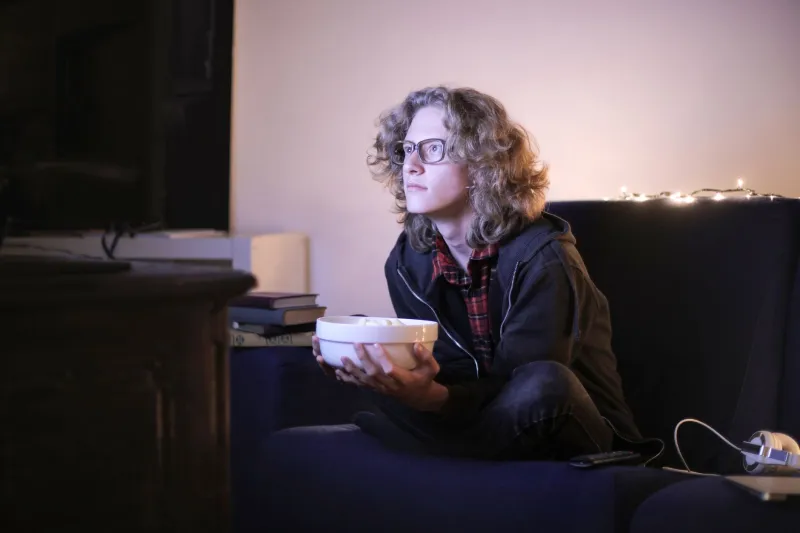
It's a Tuesday night. You've got a bowl of whatever's left in the fridge, the lights are low, and you're thirty minutes into a film where the main character eats dinner alone for the fourth time in a row. Nobody's talking. The score is barely there. And somehow — somehow — you feel it in your chest like a fist.
That's not an accident. That's cinema doing exactly what it was designed to do, just under conditions that have become way more common than anyone expected.
Streaming didn't just change how we watch movies. It changed who we are when we watch them. And for a very specific kind of film — the quiet, introspective, character-driven kind built around loneliness, alienation, and the ache of human disconnection — the solo couch experience isn't just a viewing preference. It's practically a prerequisite.
The Room You're In Is Part of the Film
Here's something film critics don't talk about enough: your environment is an active ingredient in how a movie lands. When you're in a theater with two hundred other people, you're protected. There's communal laughter to break tension, strangers shifting in their seats, the ambient hum of shared experience. You feel things together, and that togetherness creates a kind of emotional buffer.
Now strip all of that away.
Solitary viewing removes the buffer. When a character on screen stares out a window for a long, uncomfortable beat, there's no one next to you to nudge with your elbow. There's no whispered "this is so sad" to release the pressure. You just sit with it. And sitting with it is where these films do their real damage — in the best possible way.
Psychologists call it affective resonance — the way emotional states become amplified when we're not socially distracted. When you're alone, you're more attuned to your own internal landscape. A film about disconnection can reach into that landscape and rearrange furniture.
Parasocial Connection in a Disconnected World
There's another layer to this, and it gets a little uncomfortable to admit: a lot of us have started forming genuine emotional bonds with fictional characters in ways that used to get laughed off as obsessive fan behavior. But it's not that simple anymore.
Parasocial relationships — the one-sided emotional connections we form with people (or characters) we've never met — have been studied for decades. What's newer is how streaming culture has turbocharged them. When you binge a film or a series alone, in your own space, in your own time, the experience feels personal in a way that shared viewing doesn't quite replicate.
A character who eats alone, scrolls their phone in an empty apartment, or has a full conversation with themselves doesn't just feel relatable. In the context of solo viewing, they feel like company. There's a strange, almost tender irony in finding comfort in a character defined by their isolation — but that's exactly what films like Lost in Translation, Her, Aftersun, and The Whale have tapped into with such devastating effect.
You're not just watching someone be lonely. You're being lonely with them. And somehow that makes both of you less alone, at least for two hours.
What Filmmakers Know That They're Not Saying Out Loud
The best directors working in this space aren't naive about the viewing conditions their films will land in. The theatrical release is increasingly a formality — a prestige stamp — for a certain class of introspective drama. The real life of these movies happens on streaming platforms, watched by individuals in private spaces.
And some filmmakers are designing for exactly that.
Take the deliberate pacing of something like Joker (2019) or the suffocating intimacy of Marriage Story — films that work in theaters but absolutely devastate when you're watching them alone at midnight with nowhere to put the feelings. Or consider how A24 has essentially built a brand around films that feel like they were made to be processed in solitude: Midsommar, Hereditary, Past Lives. These aren't popcorn-with-friends movies. They're sit-alone-and-stare-at-the-ceiling-afterward movies.
Longer silences, closer close-ups, minimal musical cues — these are deliberate tools that become exponentially more powerful without an audience around you to dilute their effect. Filmmakers are leaving more space in their work, and that space fills up fast when you're the only one in the room.
America's Quietly Growing Appetite for Emotional Exposure
It's worth noting that this isn't happening in a vacuum. American viewing culture has shifted significantly over the past decade. The data on solo streaming is staggering — a huge chunk of Netflix users, for instance, watch alone most of the time. The pandemic accelerated a trend that was already well underway: people consuming film as a deeply private activity.
And as that behavior normalized, so did a certain kind of emotional openness that used to feel risky. There's something about watching a film alone that gives you permission to feel things fully — to cry without being seen, to pause and breathe, to rewind and sit with a moment that hit too close. You're not performing your reaction for anyone. You're just having it.
Films about loneliness give people a container for emotions that don't always have a socially acceptable outlet. The guy who's going through a divorce but doesn't want to talk about it. The college student who moved to a new city and hasn't found their people yet. The person who's fine, technically, but feels the specific heaviness of being surrounded by others and still somehow separate.
These viewers aren't seeking out Lost in Translation because they're film buffs. They're seeking it out because it says something they haven't found the words for yet.
The Catharsis Is the Point
Greek theater had a word for this: catharsis — the emotional purging that happens when you experience intense feelings through art rather than through your own life. It's why tragedy has always been one of cinema's most powerful modes. And it turns out, streaming culture's solitary viewing habits have created one of the most effective catharsis delivery systems in entertainment history.
Watching a film about loneliness, alone, in the dark, at a time when you're already feeling a little unmoored — that's not a depressing experience. For a lot of people, it's a releasing one. The film holds your feeling, reflects it back at you, and tells you that someone, somewhere, understood it well enough to make something about it.
That's not nothing. That's actually kind of everything.
So the next time you find yourself choosing the quiet, sad movie over the loud, fun one — and you find yourself watching it alone, lights off, phone face-down — don't overthink it. You're not being antisocial. You're just letting cinema do what it does best: make you feel less like the only person who's ever felt exactly like this.
And honestly? Appu Movies thinks that's worth staying up for.