From 'I Don't Read Movies' to Binge-Watching Squid Game at 2 AM: America's Foreign Film Awakening
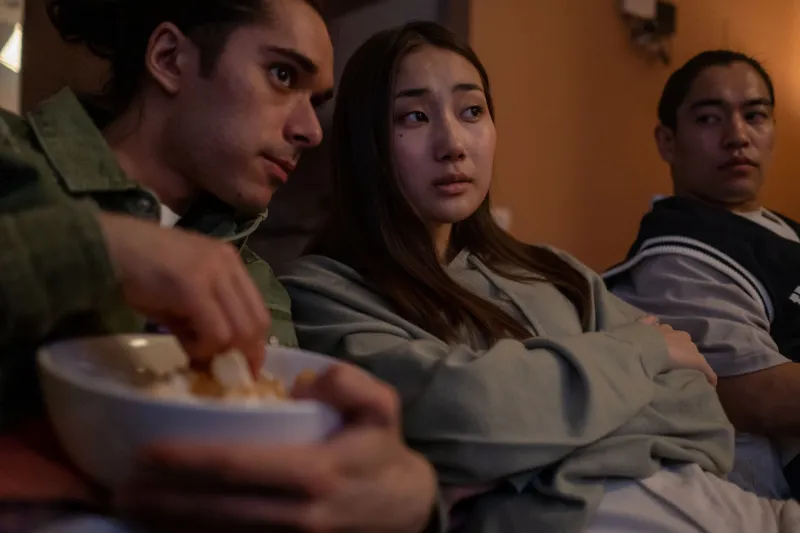
There used to be a joke — half-serious, half-defensive — that Americans don't watch foreign films because they don't want to read their entertainment. It was a cultural shorthand that stuck around for decades, used to explain why a critically acclaimed French thriller would get a limited release in three cities while a mediocre domestic action flick opened on 4,000 screens. That joke doesn't land the way it used to. Mostly because it stopped being true.
Something shifted. And it shifted fast.
The Number That Changed Everything
When Squid Game dropped on Netflix in September 2021, nobody — not the platform, not the creators, not the most optimistic entertainment analyst — predicted it would become the most-watched series in Netflix history at the time. A Korean survival thriller, entirely in Korean, with subtitles. It racked up 1.65 billion viewing hours in its first four weeks. In the United States alone, it dominated water cooler conversations, Twitter threads, Halloween costume shops, and late-night talk show monologues.
But Squid Game wasn't a fluke. It was a signal.
Look at the data trail leading up to it. Money Heist from Spain had already built a massive American fanbase over multiple seasons. Dark, a mind-bending German sci-fi series, developed a cult following that rivaled anything Netflix produced domestically. Lupin, the French caper series starring Omar Sy, hit 70 million households globally in its first month — with a substantial chunk of that audience coming from the US. The appetite was already there. Squid Game just made it impossible to ignore.
Streaming Broke the Distribution Wall
For most of cinema history, the barrier keeping foreign films out of American living rooms wasn't cultural stubbornness alone — it was structural. Foreign-language films had limited theatrical distribution, sat in the 'foreign' section of video rental stores that most people walked past, and rarely made it onto cable TV. The gatekeeping was real and it was physical.
Streaming demolished that infrastructure overnight.
When Netflix, HBO Max, Hulu, and Amazon Prime Video started investing heavily in international content — not just licensing it, but producing original series and films in Korea, Spain, Germany, Brazil, France, and beyond — they placed those titles right alongside domestic hits. Same interface. Same recommendation algorithm. Same 'because you watched this' nudge at midnight when your willpower is lowest.
The algorithm, for once, was doing something useful. It stopped asking viewers to seek out foreign content and started serving it to them in the middle of a normal Tuesday night. That friction — the active choice to go find something subtitled — essentially disappeared.
TikTok Did What Film Critics Couldn't
Here's something the arthouse cinema crowd might find a little humbling: decades of critical praise for international cinema moved the needle far less than a 45-second TikTok video of someone ugly-crying over a scene from a Korean drama.
Social media, particularly TikTok, became the word-of-mouth engine that foreign film never had access to before. 'Watch this scene' culture doesn't care about language barriers. A devastating emotional moment from a Thai film, a jaw-dropping plot twist from an Israeli thriller, a hysterically funny bit from a Mexican comedy — these clips travel. They rack up millions of views. They create curiosity. They convert casual scrollers into actual viewers.
Younger American audiences, particularly Gen Z, grew up in a media environment that was already globally connected through gaming, K-pop, anime, and internet culture. For them, subtitles were never a dealbreaker the way they were for older generations. They'd been reading text on screens while consuming media since childhood. A foreign-language film was just another format, not a foreign object.
What This Means for Hollywood
This is where things get genuinely interesting — and a little complicated for the traditional Hollywood machine.
For years, American studios operated on a fairly comfortable assumption: domestic audiences want domestic stories, and foreign markets can be served with dubbed versions of American content. That model propped up a certain kind of filmmaking. Big, loud, visually driven blockbusters that could travel internationally without much cultural translation. Dialogue-light action. Universal spectacle.
That assumption is cracking.
If American viewers are actively choosing to spend their evenings with subtitled content — and doing so in numbers that dwarf the audience for many mid-budget American films — then the argument for making generic, culturally flattened content 'for global audiences' gets weaker. Specificity, it turns out, is exactly what audiences want. The most distinctly Korean thing about Squid Game — its class critique rooted in South Korean economic anxiety — is precisely what resonated with American viewers living through their own version of economic precarity.
Studio executives are noticing. There's been a measurable uptick in American platforms commissioning foreign-language originals rather than simply licensing them. There's also been a quieter, more uncomfortable conversation happening inside Hollywood about whether American filmmakers have gotten too comfortable making safe, familiar content while international creators were out there swinging for the fences.
The Subtitle Stigma Isn't Totally Gone
Let's be real — this isn't a complete cultural revolution. Subtitled films still face resistance in certain segments of the American viewing public. Theatrical releases of foreign-language films still struggle to find wide distribution. The Academy's International Feature Film category still feels like a separate, lesser conversation from the main awards race, even after Parasite crashed that party in spectacular fashion back in 2020.
And dubbing is having its own quiet comeback. Netflix offers dubbed tracks for most of its major international hits, and plenty of viewers use them. The debate over dubbing versus subtitles is its own cultural battleground — purists on one side, accessibility advocates on the other, and everyone in between just trying to figure out which version lets them eat dinner and watch TV at the same time.
But the direction of travel is clear. The old resistance is softening. Each generation of American viewers is coming in with less of the old prejudice and more of the global media fluency that makes subtitles feel like a minor inconvenience rather than a dealbreaker.
A New Kind of Mainstream
What we're watching — and this is the part worth paying attention to — is a redefinition of what 'mainstream' American entertainment looks like. It used to mean English-language, American-produced, broadly familiar. Now it increasingly means whatever captures collective attention, regardless of where it was made or what language it was filmed in.
That's a genuine cultural shift, not just a streaming metric. And for anyone who loves cinema — the actual art of it, the storytelling ambition, the range of human experience it can capture — it's a pretty exciting one.
Hollywood isn't going anywhere. But its monopoly on American imagination? That ended somewhere around 2 AM on a Tuesday, when millions of people decided they'd watch just one more episode of something they couldn't have named a week earlier, in a language they don't speak, and found themselves completely unable to stop.