When the Score Becomes the Star: How Movie Music Built Its Own Obsessive Fandom
There's a specific kind of person who finishes watching a movie, immediately pulls up Spotify, and spends the next forty minutes hunting down the exact cue that played during that scene. You probably know one. You might be one. And if the past decade of streaming data, Reddit threads, and sold-out orchestral concerts are any indication, there are a whole lot more of you than Hollywood ever expected.
Film music fandom isn't new — John Williams has been collecting devotees since Jaws scared an entire generation out of the ocean in 1975. But something shifted somewhere around the mid-2010s. Soundtracks stopped being a bonus feature and became the main event for a growing, deeply passionate corner of the cinema world.
From Background Noise to Billboard Charts
For most of cinema history, a film score's job was simple: stay out of the way while quietly doing everything. Bernard Herrmann's strings in Psycho, Ennio Morricone's whistling deserts in The Good, the Bad and the Ugly — brilliant work, widely appreciated, but still understood as part of the film rather than something that existed independently of it.
Streaming changed the math entirely. When Spotify and Apple Music started organizing film scores into their own playlists and recommendation algorithms, listeners discovered they could experience a movie's emotional architecture without ever watching the film. Hans Zimmer's work for Interstellar became a standalone meditation album for people who'd never seen the movie. Jonny Greenwood's unsettling compositions for Paul Thomas Anderson films found audiences in indie music spaces that rarely intersect with arthouse cinema.
The numbers aren't trivial either. Zimmer's Interstellar soundtrack has racked up billions of streams. Ludwig Göransson's score for Black Panther won a Grammy. Hildur Guðnadóttir took home an Oscar for Joker and promptly became the subject of serious long-form profiles in outlets that don't typically cover film composers at all. These aren't background figures anymore.
The Composer as Celebrity
Something genuinely strange has happened to how audiences relate to film composers. There's a parasocial warmth surrounding figures like Zimmer, Trent Reznor, Atticus Ross, and Nicholas Britell that mirrors how people feel about their favorite musicians or directors. Fans follow their careers across projects, debate their best work with the intensity of album stans, and track their upcoming collaborations like sports fans monitoring a free-agent signing.
Nicholas Britell is a good example of this shift. His work on Succession turned a lot of casual viewers into people who actively sought out his previous scores for films like Moonlight and If Beale Street Could Talk. The fanbase didn't form around the films first — it formed around him, and then people went backward through his catalog.
Reznor and Ross, coming from the rock world with Nine Inch Nails credibility already attached, brought an entirely different audience into film score appreciation when they started collaborating with David Fincher. People who'd never cared about a film score in their lives suddenly cared about the Social Network soundtrack because they already trusted Reznor's artistic instincts.
When the Music Outlives the Movie
Here's the uncomfortable truth that studios probably don't love discussing: sometimes the score is just better remembered than the film itself. Requiem for a Dream is a genuinely difficult watch — relentlessly bleak, emotionally exhausting. But Clint Mansell's main theme has been used in trailers, commercials, and memes so many times that most Americans under forty recognize it without being able to name where it's from. The music achieved a cultural reach that arguably exceeded the film's mainstream footprint.
The same dynamic plays out with scores that become culturally ubiquitous almost despite the movies they accompanied. Some films earn mixed reviews, disappear from the conversation within a year, and yet their music keeps circulating — in TikTok videos, in workout playlists, in the background of YouTube essays about completely unrelated topics. The score becomes a kind of cultural residue that outlasts the film's relevance.
This creates a fascinating tension for filmmakers and composers alike. A memorable score can rescue an average film from complete obscurity. But it can also create a weird imbalance where audiences remember the emotional texture of a movie better than anything that actually happened in it.
The Live Concert Phenomenon
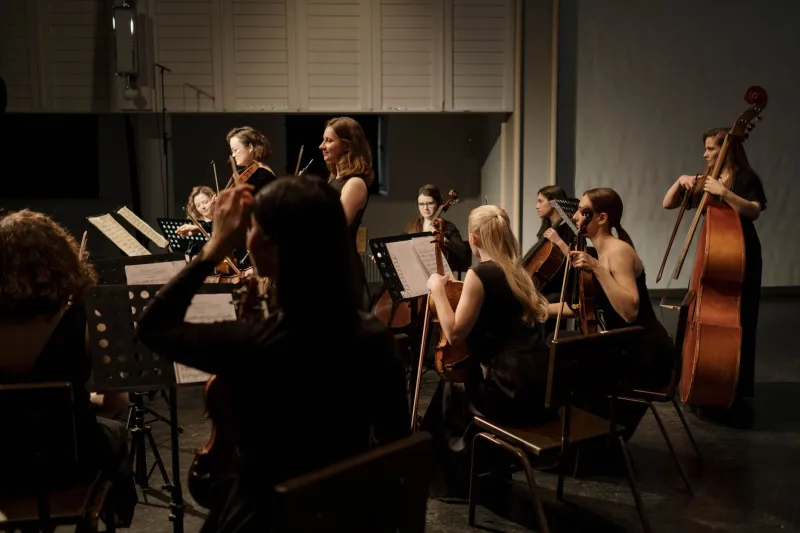
Nothing illustrates the depth of film score fandom quite like the fact that people are buying tickets — sometimes expensive tickets — to sit in concert halls and listen to movie music played by live orchestras. The Star Wars in Concert series has toured arenas. Hans Zimmer's live shows have sold out venues across the US. The Game of Thrones Live Concert Experience (which, yes, draws heavily on film and TV score culture) packed stadiums.
These aren't nostalgic novelties. They're full productions, and the audiences treating them with the reverence typically reserved for classical performances or major rock shows. People dress up. They cry. They give standing ovations for music they've heard hundreds of times, and the live context makes it feel new again.
That's a remarkable thing when you step back from it. A piece of music written to support a visual medium is generating an emotional response powerful enough to sell out a theater with no visuals at all.
Why Some Scores Break Through and Others Don't
For every Interstellar or Inception, there are dozens of genuinely excellent film scores that evaporate the moment the credits roll. Brilliant work gets lost all the time — not because it's inferior, but because the conditions for cultural stickiness are unpredictable and a little arbitrary.
Thematic memorability matters enormously. Williams understood this intuitively — give people a melody they can hum, and they'll carry your music everywhere. Scores built entirely on atmosphere and texture, however sophisticated, have a harder time embedding themselves in the public consciousness. That's not a criticism; it's just the economics of how music travels.
The film's cultural footprint matters too. A score attached to a franchise film gets exponentially more exposure than one attached to a limited-release drama, regardless of relative quality. And then there's the streaming era variable: a score that lands on the right playlist at the right moment can find a completely unexpected audience years after the film stopped being discussed.
A Fandom That Takes Itself Seriously
Spend any time in film score communities — the dedicated subreddits, the YouTube channels that break down orchestration choices, the podcasts devoted entirely to analyzing cinematic music — and you'll notice they take this stuff seriously. Not pretentiously, but with the kind of genuine engagement that signals a real artistic community rather than a casual hobby.
That's probably the most interesting development of all. Film music fandom has developed its own critical vocabulary, its own canon debates, its own rising stars to champion and legacy figures to reappraise. It operates like any other music fandom, except its reference points are woven into the emotional memories of watching films.
For a medium that spent most of its history asking audiences not to notice it, that's a pretty remarkable place to end up.