Stop Gatekeeping Subtitles: The Dubbing Debate Has a Snobbery Problem
Let's set the scene. You mention to a film-obsessed friend that you watched Parasite dubbed instead of subtitled. The look you get in return? Somewhere between pity and quiet disgust. Like you just admitted to eating a five-star meal with a plastic spork.
This is where we are with the dubbing debate in 2025. What started as a legitimate artistic conversation about translation and performance has calcified into a rigid social hierarchy — one where subtitles are the mark of a serious cinephile and dubbing is, apparently, what people watch when they can't be bothered to "really" engage with a film. That's not just wrong. It's kind of exhausting.
Where the Snobbery Comes From
To be fair, the bias didn't materialize out of nowhere. Early dubbing in the American market — particularly in the 1980s and '90s — was genuinely rough. Lip sync was off, voice casting was lazy, and the emotional register of performances often got flattened in translation. If you grew up watching poorly dubbed kung fu movies or anime where every character sounded like they were reading off a teleprompter, you'd develop a bias too.
But here's the thing: that era is largely over. The dubbing industry has evolved dramatically, and the gap between a well-produced dub and the original language track has never been smaller. Voice directors, localization writers, and professional voice actors now treat dubbing as the craft it actually is — one that requires its own unique skill set entirely separate from on-screen performance.
Somehow, though, the stigma stuck around long after the quality improved.
What Dubbing Actually Requires
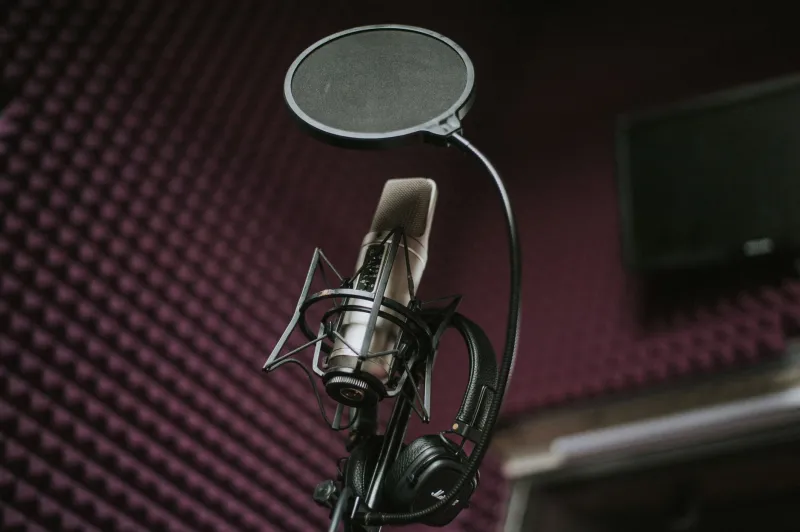
Here's something most casual viewers don't think about: dubbing a film isn't just swapping out audio. It involves rewriting dialogue to match mouth movements while preserving emotional intent, cultural nuance, and narrative rhythm. A voice actor has to deliver a performance that feels authentic without being able to use their body, their face, or the physical environment of a set. They're working entirely from the neck up, syncing to footage they didn't shoot, in a booth, often in isolation.
Voice actors who work in dubbing — particularly in the anime and foreign film space — will tell you it's one of the most technically demanding forms of performance work out there. Studios like Funimation (now part of Crunchyroll) and NYAV Post have spent years building pipelines that treat localization as a genuine art form. Directors like Mike McFarland and Stephanie Sheh have championed the idea that a dubbed performance, done right, can carry just as much emotional weight as the original.
That's not a minor claim. That's a rethinking of what "authentic" even means in cinema.
Accessibility Isn't a Compromise
Let's talk about the elephant in the room: not everyone can read subtitles comfortably, and that has nothing to do with intellectual laziness.
People with dyslexia, certain visual impairments, or processing differences often find subtitle-heavy viewing genuinely difficult. Parents watching with young kids who can't read fast enough. People who are multitasking — yes, that's a real and valid way millions of Americans watch movies. Elderly viewers whose reading speed has slowed. Anyone recovering from an eye injury or migraine.
When film snobs frame dubbing as the lesser option, they're not just making an aesthetic argument. They're inadvertently suggesting that all of these viewers are engaging with cinema in a lesser way. That's not a take worth defending.
Accessibility and artistic integrity are not in opposition. A film that reaches more people because it offers a high-quality dubbed version hasn't been diminished — it's been extended.
The Double Standard Nobody Talks About
Here's where it gets interesting. American audiences have been watching dubbed content for decades without realizing it — or without caring.
Foreign-language films edited for U.S. release often have audio sweetening, re-recorded dialogue, and sound design tweaks that technically constitute a form of post-production alteration. Plenty of prestige European films that won over American critics in the '60s and '70s were seen in dubbed versions by wide audiences. Nobody stripped those films of their cultural credibility.
And yet, today, if you watch Money Heist in Spanish with an English dub rather than subtitles, you're apparently watching it wrong. The inconsistency is glaring once you notice it.
There's also something worth noting about how this debate skews culturally. Dubbing is standard practice across much of Europe — in Germany, France, and Italy, virtually all foreign films are dubbed for theatrical release. These are countries with deep, serious film cultures. Nobody's telling German audiences they're watching cinema incorrectly.
When Dubbing Actually Enhances the Experience
There are cases where a dub doesn't just match the original — it arguably adds something.
The English dub of Studio Ghibli's Spirited Away, produced by Disney with a cast that included Daveigh Chase and Suzanne Pleshette, is widely considered one of the finest localizations ever produced. Many Western viewers who grew up with that version have a deep emotional connection to those performances. Telling them their experience was somehow less valid than a subtitled viewing is a strange hill to die on.
Similarly, the English dub of Cowboy Bebop — produced by Funimation in the early 2000s — is frequently cited as superior to the original Japanese track by a significant portion of the fan base, including many Japanese viewers who've encountered it. These aren't fringe opinions. They're legitimate aesthetic responses to genuinely excellent work.
What We Actually Lose When We Dismiss Dubbing
When the film community reflexively dismisses dubbing, it does a few harmful things at once.
It narrows the audience for foreign cinema at a moment when international film is having a genuine cultural moment in the U.S. It devalues an entire category of performance work done by skilled professionals. And it reinforces a gatekeeping culture that makes casual viewers feel unwelcome in conversations about film — which, if you're running a site dedicated to bringing more people into the world of cinema, is exactly the opposite of what you want.
The goal should be more people watching more films from more places around the world, in whatever format lets them connect with the story most fully. If that's subtitles, great. If that's a well-crafted English dub, also great.
The Bottom Line
Subtitles aren't a virtue. Dubbing isn't a compromise. They're two different tools for doing the same thing — making a film accessible to an audience that didn't grow up speaking the language it was made in.
The next time someone tells you that you watched something the "wrong" way because you chose the dubbed version, you have our full permission to ignore them entirely and go watch whatever you want, however you want. That's kind of the whole point of movies.
At Appu Movies, we think great cinema belongs to everyone — not just people who can read at 400 words per minute in the dark.