Oscar Bait, Broken Films: When Brilliant Acting Can't Patch a Leaking Script
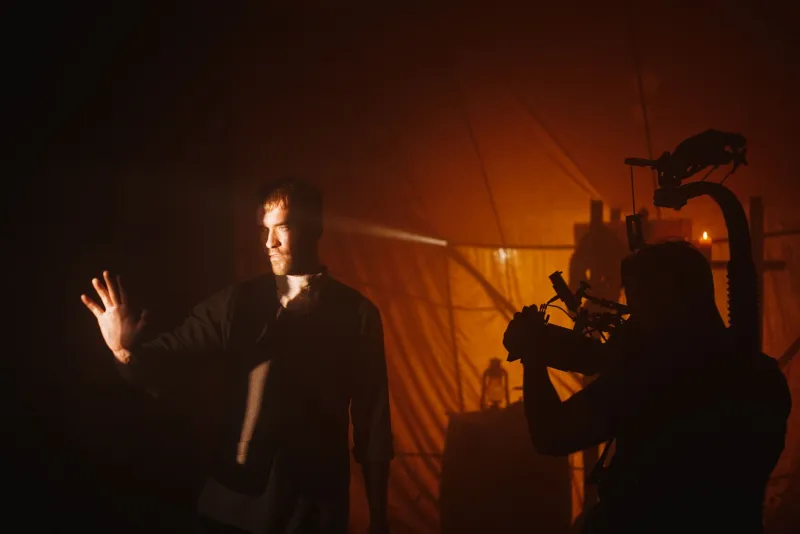
There's a particular kind of heartbreak that only movie lovers know. You're watching an actor absolutely cook — delivering line readings that give you chills, carrying emotional weight that should floor anyone in the room — and somewhere in the back of your head, a quiet voice keeps whispering: this movie is kind of a mess, isn't it?
It happens more than Hollywood would like to admit. A studio assembles a dream cast, the trailers look electric, the buzz builds — and then the finished product lands with a thud that no amount of talent can soften. Great acting is real, it's powerful, and it deserves to be celebrated. But it turns out even the most transcendent performance can't steer a ship that's already taking on water below deck.
So what gives? Why do some films fail despite having everything they need in the cast? And what does that tell us about what actually makes a movie work?
The Myth of Star Power as a Safety Net
For decades, the conventional wisdom in Hollywood went something like this: attach a big enough name, and the movie will find its audience. And look, that logic held up for a while. But audiences have gotten sharper. Streaming has made people more discerning — when you can watch virtually anything from your couch, you stop giving automatic passes to films just because a recognizable face is on the poster.
The result? We've entered an era where star power is no longer a rescue device. It's a spotlight. And sometimes, a spotlight just shows you more clearly what's broken.
Think about Babylon (2022). Margot Robbie and Brad Pitt brought everything they had to that film. Robbie in particular was ferocious — chaotic, magnetic, genuinely tragic. Critics who liked the movie at all mostly liked her. But the film itself was an overstuffed, three-hour exercise in excess that couldn't figure out what it wanted to say about Hollywood or the people inside it. The performances were real. The movie around them felt like a fever dream that never quite resolved.
When the Script Is the Villain
If you want to understand why great acting fails to save bad movies, start with the screenplay. A script isn't just dialogue — it's architecture. It determines what characters want, why we should care, and where the whole thing is going. When that foundation is shaky, even the most committed actor is basically building furniture in a house with no walls.
Amsterdam (2022) is a painful case study. David O. Russell assembled one of the most absurd ensemble casts in recent memory — Christian Bale, Margot Robbie (again), John David Washington, Robert De Niro, Rami Malek, Taylor Swift, Zoe Saldaña. The list goes on. These are not people who phone it in. And yet the movie bombed catastrophically, pulling in around $6 million against a reported $80 million budget. Critics were baffled. Audiences were confused. The performances weren't the problem — the story was so convoluted and tonally unsteady that no amount of charm could anchor it.
You can feel the actors working hard in that movie. Which is almost sadder. When you can see the effort and still can't connect with the film, something structural has gone wrong.
Direction Matters More Than We Give It Credit For
Here's something film Twitter loves to argue about: who really makes a movie? The writer? The director? The cast?
The honest answer is all of them — but the director is the one who synthesizes everything. They decide the pacing, the visual language, the emotional temperature of every scene. A great director can coax a career-best performance out of a decent actor. A poor one can make a brilliant actor look lost.
Morbius (2022) became a meme, which almost obscures how genuinely strange it is that Jared Leto — a committed, technically skilled performer — ended up in something so tonally incoherent. The direction couldn't establish what kind of movie this was supposed to be. Horror? Action? Tragedy? Comedy (accidentally)? Leto did his thing, but without a clear directorial vision holding the film together, the performance had nowhere to land.
This is the director's invisible hand. When it's working, you don't notice it. When it's gone, even the best actors look like they're performing in different films simultaneously.
Production Problems Leave Marks
Sometimes a movie is wounded before it even starts shooting. Rewrites, budget cuts, studio interference, rushed post-production — these things leave scars that editing can't fully hide. And when a film arrives damaged, the cast inherits the chaos.
Chaos Walking (2021) spent years in troubled development. Tom Holland and Daisy Ridley — both genuinely likable screen presences with real chemistry — couldn't quite overcome a production that had been through the wringer. The movie felt patchy and unfinished in ways that had nothing to do with their performances. They were doing their jobs. The machine around them had stalled.
Audiences can feel this stuff, even if they can't name it. Something just feels off. The pacing lurches. Scenes don't connect emotionally the way they should. Characters make decisions that don't track. And no matter how good the acting is in any individual moment, the cumulative effect is a movie that doesn't hold together.
What This Actually Tells Us About Cinema
Here's the thing — none of this is meant to diminish the actors involved. If anything, watching a great performance in a broken film is its own kind of tribute to what actors can do. Margot Robbie in Babylon is worth seeing. Christian Bale in Amsterdam has moments that genuinely sing. These performances exist, and they matter.
But cinema is a collaborative art form, and that collaboration has a hierarchy whether we like it or not. A weak script can undermine a great director. A great script can survive a mediocre director. A transcendent performance can elevate a flawed movie — but only so far. At some point, the cracks in the foundation win.
For audiences browsing their streaming queues, this is actually useful information. If you see a film that got mixed reviews but someone you love to watch is in it, go ahead and check it out — just go in with calibrated expectations. You might find a performance worth the price of admission even if the movie around it disappoints you.
And for Hollywood? The lesson keeps repeating, and the industry keeps having to relearn it. You can't cast your way out of a bad script. You can't act your way through a directionless production. The movies that endure — the ones people rewatch and recommend and quote years later — tend to be the ones where everything worked together, not just the part that showed up on the poster.
Star power is a gift. It's just not a guarantee.