The Twist Is Already in Your Feed: How Spoiler Culture Broke the Art of the Surprise Ending

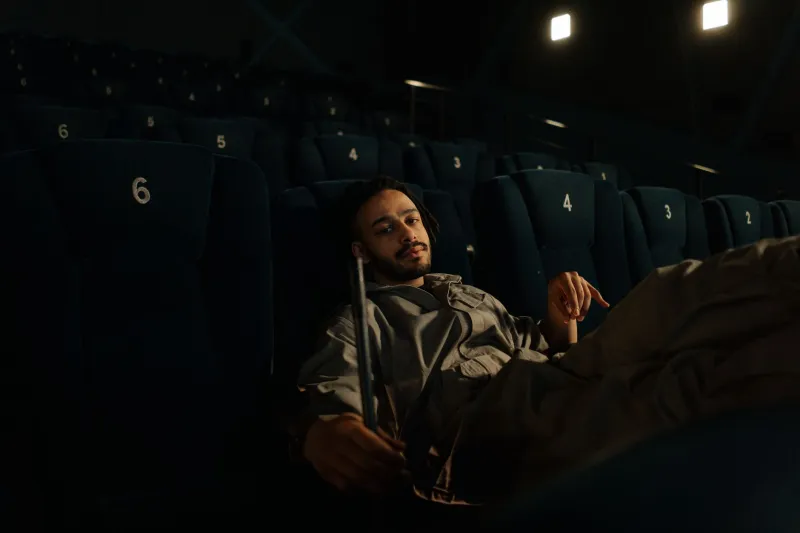
Photo by Photo by Daniil Onischenko on Unsplash on Unsplash
Remember the first time you watched The Sixth Sense without knowing the ending? Or Fight Club? Or Parasite, if you somehow went in cold? That specific feeling — the floor dropping out, the entire film rearranging itself in your memory in real time — is one of the most electric experiences cinema can offer.
Now ask yourself: when was the last time a movie actually did that to you?
For a growing number of film fans, the honest answer is a while ago. And the reason isn't that screenwriters have gotten worse at constructing twists. It's that the ecosystem around films has become so dense, so fast, and so spoiler-saturated that the conditions required for genuine surprise barely exist anymore.
How We Got Here
The machinery of modern film discourse moves at a speed that would have been unimaginable even fifteen years ago. A trailer drops and within hours there are YouTube videos frame-by-framing every shot, Reddit threads cataloguing every visible prop and background detail, and Twitter accounts confidently predicting the ending based on a two-second clip of a doorknob.
This isn't fringe behavior. Trailer analysis videos routinely rack up millions of views. "Everything you missed" breakdowns are a legitimate content genre with dedicated audiences. Fan communities on Discord and Reddit treat upcoming releases like puzzles to be solved rather than experiences to be had.
And then there are the leaks. Test screening attendees post plot details. Crew members talk. Production photos surface. By the time a highly anticipated film actually opens, a significant chunk of its intended audience already knows the shape of the story — and the rest know that spoilers exist and are actively trying not to see them, which creates its own kind of anxiety.
Marketers, meanwhile, have developed a complicated relationship with all of this. Spoiler-heavy discourse generates engagement, and engagement drives ticket sales. The temptation to let a little information leak — just enough to fuel the conversation without giving everything away — is real, and studios don't always resist it.
The Twist as a Structural Problem
Here's something directors and screenwriters are increasingly reckoning with: the traditional plot twist was always, to some degree, a cheat. It worked by withholding information from the audience that the story actually had access to. The reveal felt satisfying because it recontextualized everything you'd already seen — but it required you to have been kept in the dark.
In a world where audiences arrive armed with theories, that darkness is hard to maintain. And even when a twist lands unspoiled, there's a meta-awareness in modern viewers that makes them expect one. Horror audiences spend the whole film hunting for the real villain. Thriller watchers are constantly auditing the cast for who seems too trustworthy. The genre literacy that streaming and film culture have built in audiences is genuinely impressive — and genuinely corrosive to the mechanics of surprise.
Some filmmakers have started talking openly about this. Directors working in thriller and horror spaces have noted in interviews that the question "how do we hide this?" has given way to "do we even try?" For certain projects, the answer has been no.
What's Replacing the Twist
The most interesting creative response to spoiler immunity isn't trying to build a better mousetrap. It's abandoning the mousetrap entirely and asking what else a film can do.
Emotional inevitability over informational surprise. Some of the most affecting recent films have leaned into a different kind of payoff — one where you can see exactly where the story is going and the power comes from watching it arrive anyway. The Whale and Aftersun are recent examples of films where there's no twist, no hidden information, no rug-pull. The devastation comes from clarity, not concealment.
Dramatic irony as a tool, not a bug. A handful of directors have started deliberately structuring their films so the audience knows more than the characters — inverting the traditional withholding model. The tension becomes about when the characters will catch up to what we already know, rather than what we'll discover alongside them. It's a fundamentally different kind of suspense, and it's arguably more emotionally sophisticated.
The experience over the ending. Films like Everything Everywhere All at Once were spoiled extensively before most people saw them, and it didn't matter. The film's power wasn't located in its plot mechanics — it was in the cumulative emotional experience of watching it, which no amount of synopsis could replicate. That's the kind of film that's genuinely spoiler-proof, because the story isn't the point.
The Films That Still Try (and Sometimes Win)
Not every director has given up on the twist. Some are adapting their approach to make surprises work in the spoiler era, with varying degrees of success.
One strategy: weaponize the meta-awareness. If audiences expect a twist, you can engineer a film that plays with that expectation — delivering what looks like the twist, then revealing the real one underneath it. It's a harder trick to pull off, and it requires an audience sophisticated enough to be fooled twice, but when it works, it's enormously satisfying.
Another approach is radical misdirection at the marketing level. Barbarian succeeded partly because its trailers were carefully constructed to make it look like a completely different kind of film than it actually was. Audiences went in expecting one genre and got something genuinely stranger. That kind of marketing-level deception is harder to execute than it sounds, but it can still manufacture surprise when the discourse ecosystem hasn't had enough material to work with.
Is the Jaw-Drop Moment Actually Gone?
Probably not entirely. The conditions for genuine surprise still exist — they're just rarer and require more careful construction. Films with smaller marketing footprints, international productions with less English-language discourse around them, or projects that move fast enough from announcement to release that the spoiler ecosystem doesn't have time to mobilize can still deliver the real thing.
But as a reliable tool of mainstream Hollywood storytelling, the traditional plot twist is under genuine pressure. The audiences who show up on opening weekend — the ones who matter most for box office — are the most plugged-in, the most theorized-up, the hardest to surprise.
Maybe that's okay. Cinema has a long history of losing one trick and finding three better ones to replace it. If spoiler culture is killing the plot twist, it might just be making room for something more durable: stories that don't need to hide anything to break your heart.