Pocket Cinema: How the Smartphone Quietly Became America's Favorite Movie Screen
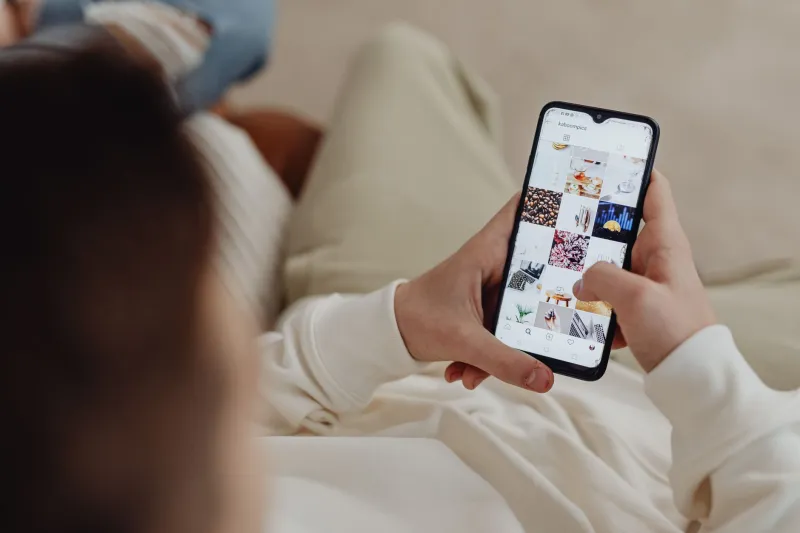
There's a moment that happens in a lot of American households. The TV is on, something's playing, and within ten minutes half the room has drifted to their phones — not to scroll Instagram, but to actually watch the movie there instead. Smaller screen, earbuds in, face three inches from the glass. Fully absorbed.
At some point, we stopped treating that as distracted behavior and started treating it as normal. And honestly? It kind of is now.
The Numbers Don't Lie (Even If Hollywood Wishes They Did)
Streaming platforms don't love to broadcast this particular stat, but mobile viewership for long-form content — including feature films — has been climbing steadily for years. A 2023 report from Deloitte found that Gen Z Americans are nearly twice as likely as older generations to watch movies on a phone as their primary device. Not a backup device. Not a travel device. The main one.
For studios still building their entire release strategy around the theatrical experience — the 70mm projection, the Dolby Atmos surround sound, the massive screen — that's a genuinely uncomfortable number to sit with. You spent $200 million making something that a significant chunk of your audience is going to watch on a 6.7-inch OLED display while lying sideways in bed.
The question isn't whether this is happening. It clearly is. The question is whether the industry is actually going to do anything about it.
What a Phone Screen Does to a Movie
Here's the thing about cinematography: it was built around specific assumptions. Wide establishing shots that reward scale. Subtle background detail that rewards attention. Color grading designed for calibrated projection. The entire visual language of cinema was developed by people who imagined you sitting in a dark room, 30 feet from a screen, with nowhere else to look.
On a phone, a lot of that just evaporates.
The sweeping landscape shot that opens a Western? On a 6-inch screen, it's a postage stamp with horses. The carefully composed two-shot where an actor's micro-expression tells you everything about the scene? That actually plays better on a phone — your face is close enough to catch every flicker. The action sequence edited at 18 cuts per minute with spatial audio designed to surround you? On earbuds, it's chaos.
Some cinematographers are already quietly adjusting. You'll notice more close-up heavy compositions in streaming-first productions. Tighter frames. Less reliance on environmental storytelling through wide geography. It's subtle, but it's there — a slow drift toward a visual grammar that survives the shrink.
The Interrupted Viewing Problem (That's Actually Not a Problem)
Traditional film criticism has always operated on the assumption that a movie deserves — and requires — uninterrupted attention. You sit down, you watch start to finish, you absorb the experience as the director intended.
Phone viewing blows that up completely.
Phone viewers pause constantly. They rewind fifteen seconds when they miss a line. They watch in two or three sessions across a day. They get a text, they look up, they come back. And here's the part that's hard for cinema purists to accept: they often still love the film. They still feel moved by it. They still recommend it to friends.
Which forces a genuinely uncomfortable question — was uninterrupted viewing ever a requirement for emotional engagement, or just an assumption we inherited from the theatrical model?
Some filmmakers are actually designing for this now. Tighter scene structures. More explicit emotional signposting so context isn't lost in a pause. Chapter-like narrative beats that let you step away and return without losing the thread. It's not dumbing down — it's adapting to how people actually live.
The Vertical Scroll Elephant in the Room
Then there's vertical video. The format that every filmmaker over 40 still flinches at.
TikTok didn't just change how we consume short content — it rewired spatial expectations for a huge portion of the American viewing audience. A generation that grew up watching vertical video instinctively holds their phone upright. Rotating to landscape feels like extra effort. And while no major studio has released a vertical feature film yet, the pressure is building.
Snap has experimented with vertical original content. Some YouTube creators have released short films in portrait orientation. A few experimental filmmakers have played with the format deliberately. It's still fringe, but the fringe has a way of becoming mainstream faster than anyone expects.
The more likely near-term shift isn't full vertical features — it's hybrid productions that are shot and edited to work in both orientations. Imagine a film where the critical action stays centered in a square-safe zone, so whether you're watching on a TV or holding your phone upright, you don't miss anything essential. Sounds like a creative straitjacket. It also sounds exactly like what studios will do the moment the math makes it unavoidable.
Should Hollywood Design for Phones First?
This is the real debate, and it's one the industry is having very quietly, mostly because the theatrical lobby is powerful and the optics of saying "we're making movies for phones now" are terrible for ticket sales.
But consider the math. A wide theatrical release in the US might reach 30-40 million people over its run if it's a genuine hit. A streaming release on a major platform can hit 50-80 million households in the first month — and a significant portion of those viewers are on mobile. The audience is just bigger on the other side of the theatrical window, and it increasingly lives in a pocket.
That doesn't mean theatrical is dead. The communal experience of watching something on a massive screen in a dark room with strangers is genuinely irreplaceable — and there's a real hunger for it, especially for spectacle films. But the idea that theatrical represents the primary audience for most movies? That ship has sailed.
Designing with mobile in mind doesn't have to mean abandoning cinematic ambition. It means expanding what cinematic means. Close-up performance work, tight dialogue, intimate storytelling — these things are actually enhanced on a small screen held close to your face. The phone isn't the enemy of cinema. It's just a different stage.
The Appu Movies Take
We're not here to tell you that watching a Kubrick film on your phone is the same as watching it in a theater. It isn't. But we're also not going to pretend that the phone experience is inherently lesser — because for millions of Americans, it's where cinema actually lives.
The most interesting filmmakers of the next decade will probably be the ones who stop treating mobile viewing as a compromise and start treating it as a canvas. The screen is smaller. The audience is closer. That's not a limitation — that's a different kind of intimacy.
And honestly? Some stories were always better told up close.