Forced Together, Falling Flat: The Real Cost of Hollywood's Mismatched Duo Problem
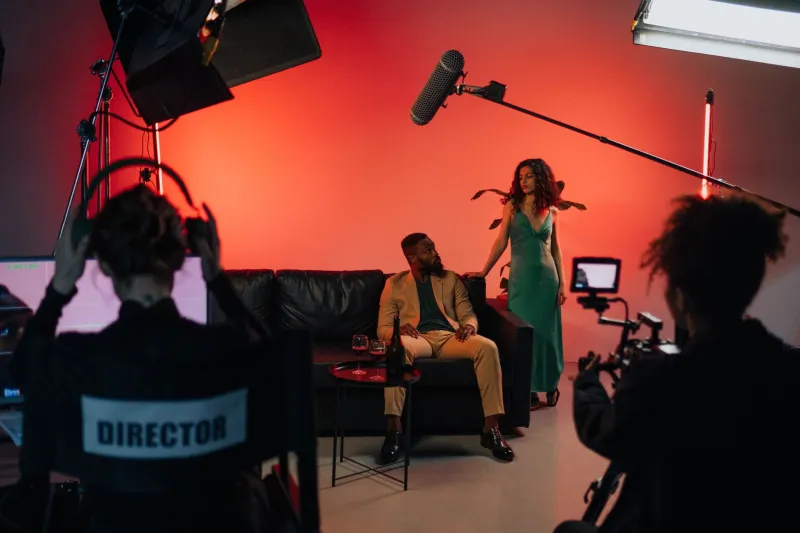
There's a specific kind of disappointment that hits when you're watching two talented actors share a scene and feel absolutely nothing. Not dislike. Not tension. Just... nothing. Like two people sitting next to each other on a long flight, politely passing the pretzels and staring at their own screens. Studios call it a "dynamic pairing." The rest of us call it what it is: a casting gamble that didn't pay off.
The buddy formula is one of Hollywood's oldest tricks. Two leads, preferably with different personalities or backgrounds, thrown into a situation that forces them to work together. Done right, it's magic — the kind of screen energy that turns a decent movie into a classic. Done wrong, it's an expensive reminder that star power and genuine rapport are two completely different things.
The Poster Looks Great. The Screen Feels Empty.
Here's how the math usually goes: Studio acquires a script. Studio wants two bankable names attached. Agents negotiate. Schedules get compared. Suddenly, you've got your duo — not because these two people have any natural pull toward each other, but because their combined Q-scores looked good in a spreadsheet.
The problem is that chemistry isn't a deliverable. You can't line-item it in a production budget. It either exists or it doesn't, and no amount of punchy dialogue or comedic set pieces can fake it convincingly for two hours. Audiences feel the difference in their gut, even if they can't always articulate it. Something's off. The laughs don't land quite right. The emotional beats feel performed rather than lived. The whole thing has the vibe of a first date where both parties are trying very hard.
When studios sense a pairing isn't clicking during production, the response is usually more script — more scenes engineered to manufacture warmth, more quippy exchanges designed to simulate banter, more forced "bonding moments" that end up feeling like trust falls at a corporate retreat. It patches the surface without fixing what's underneath.
What Real Chemistry Actually Looks Like
For contrast, think about the pairings that felt effortless. Will Smith and Martin Lawrence in Bad Boys — two guys who seemed genuinely delighted to be annoying each other. Sandra Bullock and Melissa McCarthy in The Heat, where the friction felt real because the personalities actually clashed in interesting ways. Or go further back: Gene Wilder and Richard Pryor, who made four movies together because audiences couldn't get enough of whatever was happening between them on screen.
None of those pairings were guaranteed wins on paper. Some were considered risks. But the actors had something — a shared comedic language, a genuine curiosity about each other, some unspoken understanding of how to give and take in a scene. That's the stuff you can't manufacture in post-production.
Even in dramatic pairings, the difference is obvious. When two actors are truly locked in, silence works. A look across a table carries weight. The space between lines becomes part of the performance. When they're not? Every quiet moment feels like dead air, and the audience starts checking their phones.
The Unexpected Duo That Somehow Works
To be fair, Hollywood has occasionally lucked into pairings that nobody predicted would click — and those are some of the most exciting discoveries in recent cinema.
There's something genuinely thrilling about watching two actors find each other in a movie when the combination looked weird on paper. Different energy levels, different acting styles, even different genres in their respective backgrounds — and somehow it all collapses into something that works. These moments remind you that chemistry isn't always about similarity. Sometimes it's about contrast finding its right friction.
The buddy dynamic doesn't require two people who are alike. It requires two people who are interesting together — who bring out something in each other that neither would produce alone. That's a harder thing to engineer, and a more honest thing to discover.
When the Script Does All the Heavy Lifting (And Still Loses)
One of the more revealing patterns in mismatched-duo films is how obvious it becomes when the writing is compensating for a weak pairing. The jokes get broader. The emotional declarations get louder. The supporting characters start doing a lot of work to explain why these two people matter to each other, because the leads aren't quite selling it themselves.
It's the cinematic equivalent of a best man speech that spends ten minutes telling you how great the couple is instead of just showing it through a story. The harder you have to argue for something, the less convincing the argument becomes.
Some scripts are strong enough to survive a lukewarm pairing — the story carries the weight, the plot mechanics keep things moving, and audiences leave satisfied even if they can't quite put their finger on what felt slightly hollow. But those are the exceptions. More often, a weak duo drags an otherwise decent film into mediocrity, and no amount of editing wizardry rescues it.
What Studios Could Actually Do Differently
The fix isn't complicated in theory, even if it's harder in practice. Read-throughs and screen tests exist for a reason — use them honestly. Give actors actual time together before locking in a pairing, not just a quick chemistry read that amounts to two people sitting across a table reading lines cold.
Some directors have made a habit of this. They'll spend real time watching their leads interact before a single camera rolls, looking for the unscripted moments that tell them whether something genuine is there. Others treat casting like a business transaction and then spend the rest of production wondering why nothing feels alive.
There's also an argument for trusting smaller names more often. Some of the best on-screen pairings in recent years have come from actors who weren't guaranteed box office draws — people who brought genuine curiosity and flexibility to their roles because they weren't also managing a brand. The unexpected duo that works is often an unexpected duo precisely because nobody was overthinking the optics.
The Audience Always Knows
At the end of the day, viewers are remarkably good at sensing authenticity — even when they can't explain why. You know within ten minutes of a buddy film whether these two people are going to take you somewhere real or spend the next ninety minutes going through the motions. That instinct is worth respecting.
The films that get this right don't just entertain — they make you believe in the relationship at the center of the story. And that belief is what turns a movie into something people remember, recommend, and come back to years later.
Forced chemistry is a tax on the audience's time. The studios that figure that out — and cast accordingly — are the ones making movies worth talking about.