Cinema Forgot How to Be Quiet: The Slow Death of Genuine Emotional Vulnerability on Screen
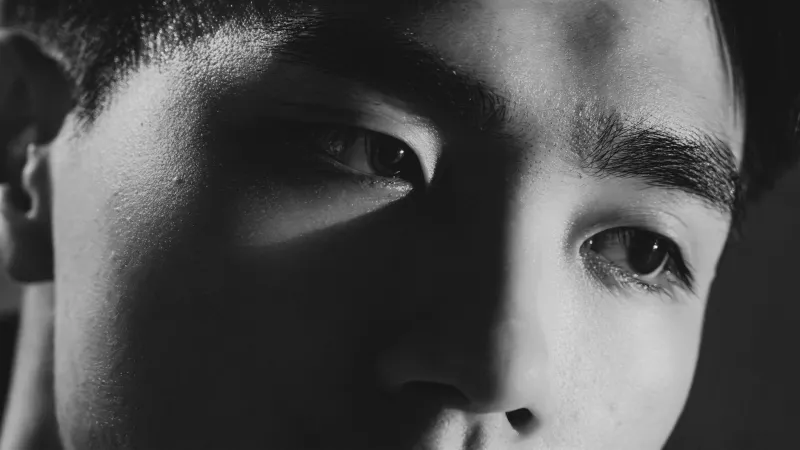
Think about the last time a movie genuinely broke you open. Not because something exploded, not because a villain finally got what was coming, but because two characters sat across from each other and said something true. Something uncomfortable. Something that felt like it was ripped from a journal nobody was supposed to read.
Can you remember it? Really remember it?
If you're struggling, you're not alone — and that's kind of the whole problem.
The Noise Floor Just Keeps Rising
Hollywood has always loved a good spectacle. That's not new. But there's a difference between spectacle as a tool and spectacle as a crutch. Somewhere between the streaming wars and the algorithm-driven content machine, movies started treating emotional stillness like dead air — something to be filled immediately, patched over with a plot beat, a musical swell, or better yet, a sudden jolt of tension that keeps your nervous system too busy to notice the scene never actually landed.
The result? A kind of emotional inflation. Everything is urgent. Every conversation is loaded with subtext that gets spelled out. Every vulnerable moment gets interrupted before it can breathe. And audiences, conditioned by years of this, have started to mistake stimulation for depth.
We're living through what you might call an intimacy recession in film — a slow withdrawal from the kind of raw, unguarded human moments that used to be the whole point of going to the movies.
What Real Vulnerability Actually Looks Like
Let's go back. Think about Dustin Hoffman sitting in a diner booth in Kramer vs. Kramer, or the wordless grief on Bill Murray's face at the end of Lost in Translation. Think about the kitchen scene in Marriage Story where Adam Driver and Scarlett Johansson stop being characters and start being every couple you've ever watched fall apart. These scenes don't announce themselves. They don't have scores that tell you how to feel. They just happen, and they trust you to meet them.
That trust — in the audience, in the silence, in the discomfort of an unresolved moment — is increasingly rare. Contemporary filmmaking often treats the viewer like someone who needs to be constantly managed, kept engaged through manufactured stakes rather than genuine emotional investment.
When vulnerability does show up now, it frequently arrives dressed in genre clothing. A character finally cries — right before a jump scare resets the emotional register. Someone confesses something devastating — and then the plot yanks us somewhere else before the confession can settle. It's not that these films are bad. It's that they're nervous. Nervous of boredom, nervous of losing you, nervous of the quiet.
The Films That Still Get It Right
The good news is that the art isn't dead. It's just harder to find, and increasingly, it lives outside the multiplex.
Past Lives (2023) is maybe the clearest recent example of a film that earns its emotional devastation through restraint rather than spectacle. Celine Song's debut feature is built almost entirely on what characters don't say, on glances held a half-second too long, on the particular weight of a goodbye that's been decades in the making. There's no musical manipulation forcing you to feel sad. There's just two people and an airport and the specific grief of a life not lived. Audiences responded to it like they'd been starving for exactly that.
A Quiet Place gets cited as a film about silence, but it's actually a film about parental guilt dressed up as a monster movie — and it works because the horror gives the emotion somewhere to hide. That's a legitimate technique, but it's also a telling one. Even our most emotionally resonant genre films feel the need to justify their feelings with plot.
Then there's The Holdovers — a movie that got a lot of love for being warm and funny, but whose real power is in Paul Giamatti's performance during a handful of scenes where he's just a lonely, difficult man who doesn't know how to be known by anyone. No fanfare. No resolution. Just a person, uncomfortably visible.
Why We're Craving Stillness So Badly Right Now
Here's what's interesting: audiences clearly want these moments. Past Lives became a word-of-mouth phenomenon. The Holdovers overperformed expectations. Smaller, character-driven films that give emotional beats room to land consistently generate the kind of passionate, personal response that a hundred-million-dollar blockbuster rarely does.
People are talking about these movies differently. Not just recommending them, but describing how they felt watching them — where they were, who they were with, what it stirred up. That's the language of genuine connection, not passive consumption.
Part of what's happening is probably a reaction to the broader pace of modern life. We're overstimulated constantly — by our phones, by social media, by the sheer volume of content competing for our attention at every moment. When a film actually slows down and asks you to sit with something real, it can feel almost transgressive. Like being handed a glass of water when you've been drinking energy drinks for a year straight.
The Industry's Fear Is the Audience's Loss
The frustrating part is that the hesitation isn't really about what audiences want. It's about what the industry thinks it can afford to risk. Quiet films are harder to market. You can't cut a trailer around a meaningful pause. You can't put "the scene where she almost cries but doesn't" on a poster.
So the films that master emotional understatement often get smaller budgets, limited releases, and the kind of awards-season positioning that feels more like a consolation prize than a genuine celebration. Meanwhile, the loud, relentless stuff gets the opening weekend rollout and the merch deals.
But the streaming era has at least opened one door: these films find their audiences eventually. People discover Past Lives on a Tuesday night and text three friends about it by Wednesday morning. The intimacy of watching something quietly devastating on your couch, alone or with someone you love, might actually be the perfect environment for this kind of cinema.
Stillness Is a Skill — For Filmmakers and Viewers Both
Reclaiming vulnerability in cinema isn't just a job for directors and writers. It's also something audiences have to practice. We've been trained to interpret slowness as weakness, silence as failure, and unresolved emotion as a flaw in the script. Unlearning that takes effort.
But when you do — when you let a film sit with you instead of rushing past you — the payoff is unlike anything a well-timed explosion can deliver. It's the feeling of being genuinely seen by something that's just a story, and somehow that's enough to change the rest of your day.
The movies that get it right aren't asking for less from their audiences. They're asking for more. And right now, that ask feels almost radical.